
Water softener systems offer a reliable way to reduce limescale caused by hard water, making cleaning more efficient and gentle on surfaces. With softened water, less scale builds up on pipes, fittings and equipment, which supports longer service life and easier maintenance. They are especially useful for solar panel cleaning, where a streak-free, spot-free finish is essential for consistent performance.
The range includes water softeners in different capacities and designs, suitable for household, light commercial and mobile use. Modern solutions are easy to operate, economical in everyday use and help reduce detergent consumption, while providing a steady supply of softened water for a wide variety of cleaning tasks.
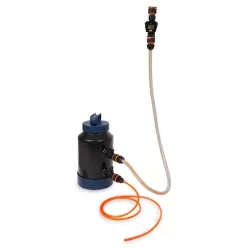
Why use a water softener system?
Hard water contains calcium and magnesium salts that gradually form limescale on surfaces and inside equipment. This is not only an aesthetic issue; it can reduce efficiency, increase maintenance needs and raise operating costs. Water softener systems are designed to reduce the amount of these minerals, so the water becomes gentler on surfaces, pipework and technical devices.
With softened water, cleaning is easier, with fewer spots and streaks left behind, and cleaning agents can work more effectively. This is especially noticeable on glass, metal and glossy surfaces, where traces of hard water quickly become visible. Investing in water softening can therefore be both a comfort upgrade and a long-term, cost-conscious decision.
Water softening solutions for solar panel cleaning
When cleaning solar panels, it is particularly important that the surface remains clean, spot-free and streak-free. Using hard water can leave small deposits that may gradually reduce the panels’ light transmission. With softened water, cleaning is more even and, after drying, fewer residues remain on the surface, helping the panels maintain consistent energy yield.
Different water softener systems can be integrated with mobile solar panel cleaning setups, pressure washers or other cleaning tools. Correctly selected capacity and performance ensure a continuous supply of softened water during cleaning, even when maintaining larger surfaces or complete installations.
Everyday applications
Water softener systems are useful not only for solar panel care, but also in many household and light industrial applications. Using softened water can reduce limescale buildup on taps, shower heads, boilers and other water heating equipment. This helps maintain efficiency and can reduce the need for frequent descaling.
Household appliances such as washing machines, dishwashers and steam cleaners can also benefit from softened water. Less limescale means less stress on heating elements, seals and internal components, which can support reliable, long-term operation. Cleaning and laundry detergents may also work more efficiently, so in many cases lower dosages are sufficient.
Different designs and capacities
The selection includes compact, easily portable water softeners that are ideal for mobile cleaning jobs, as well as higher-capacity systems designed for continuous water supply. Smaller units suit users who need softened water periodically, for example for solar panel cleaning, vehicle washing or glass surface maintenance.
Larger, more powerful systems are better suited to permanent installation, for example connected to a household or business water network. These provide a constant supply of softened water for taps, cleaning equipment and other points of use, ensuring consistent water quality throughout the system.
Use and maintenance considerations
Modern water softener systems are designed for simple operation and dependable performance. After installation, most solutions only require periodic maintenance, such as filter replacement or replenishing the softening medium. Maintenance needs are usually easy to plan, supporting predictable, long-term use.
For proper operation, it is worth considering local water hardness and typical consumption. In areas with very hard water or high usage, a higher-capacity system may be advisable to maintain the desired water quality consistently. A well-chosen system can make everyday cleaning tasks more convenient and help deliver stable results.
Benefits for cleaning tasks
Cleaning with softened water leaves fewer deposits on glass, metal and plastic surfaces, so there is less need for post-polishing or the use of aggressive chemicals. This is particularly beneficial for large areas such as solar panels, glass façades, conservatories or vehicle fleets.
Softened water can also improve the foaming and dissolving performance of cleaning agents, supporting efficient workflows. The result is a visually cleaner, more uniform finish, while cleaning equipment and pipework are exposed to less limescale stress.
A solid basis for long-term protection
Water softener systems help preserve the condition of equipment, surfaces and plumbing over the long term. Reduced limescale buildup can mean fewer malfunctions, fewer cleaning interventions and more predictable operation. Whether for solar panel cleaning, household use or light industrial applications, softened water provides a solid foundation for durable, neat and efficient operation.
With a variety of sizes and configurations available, it is easy to find a water softener system that matches specific usage needs, local water quality and expected load. Choosing the right system can make day-to-day cleaning tasks simpler, more predictable and, over time, more cost-effective.